


The installation of an irrigation system is an important factor for obtaining quality yields. The practice of our farmers clearly shows that investing in an irrigation system optimizes the water resource consumption by up to 40%, depending on the chosen method of watering, and the long service life of the irrigation equipment ensures you smooth operation of the field for years to come.
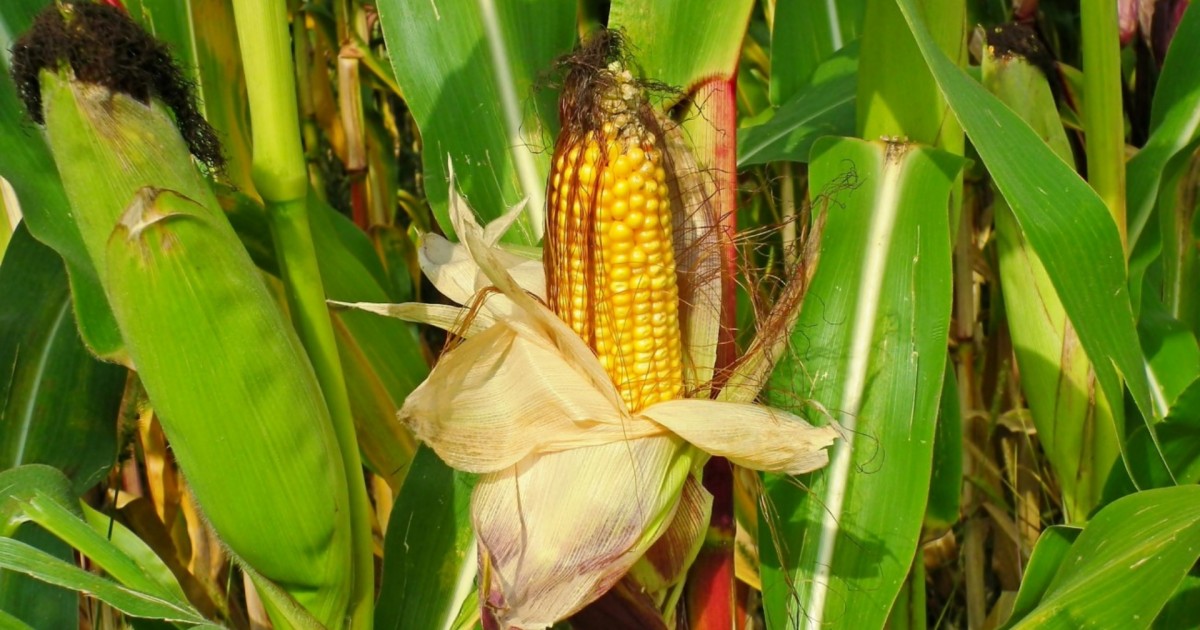
Rainfall cannot fully cover the water consumption of cereals. Often they provide only up to 40-50% of the water that the cereals need. In the different growth phases, the crops need different amounts of water. The water consumption of corn as the main representative of cereals, for example, until germination is about 1m3 of water, from germination to the 9th-10th leaf - 2m3, from the 9th-10th leaf to tasselling - 2.6 to 4.4m3, from tasselling to flowering - 3.5 to 5.5m3, from flowering to lactic ripeness – 5.5 to 6.0m3 from lactic ripeness to waxy ripeness – 3.8 to 4.4m3, from wax to full ripeness – 1.5 to 2.3m3. Extremely low rainfall requires watering to begin before the tasselling stage by maintaining soil humidity of 75% of the maximum water-retaining capacity of the soil. During the tasseling-to-flowering period, the soil moisture should be maintained at about 80-85% of the maximum water-retaining capacity, after which it should be within 70-75% of the maximum water-retaining capacity to a depth of 50cm in the soil layer. Under ordinary conditions, the maintenance of the indicated moisture in the soil is achieved with 3-4 watering applications, and with 4-5 watering applications in very dry periods.
Rain-pipe watering is considered as the most effective method of irrigation of cereals. It is the pressurized spraying of water into the air using special irrigation installations. The advantages include the precise dosage of the irrigation amount, the relatively high uniformity of the watering and the possibility of automation of the process, which in turn drastically reduces the costs and the need for additional human attendance to control the irrigation process.
The main types of rain-pipe installations that we offer are:
The use of this method will provide your farm with a large coverage, this is also the reason for it to be one of the most preferred ways of irrigation in industrial agriculture. You can adjust the irrigation amount and achieve even irrigation of the entire area. The pivot systems are suitable for projects of various types and sizes. A highly preferred method for intensive cultivation of different crops. The end result is improving the yield quality and quantity, savings of labor, water and energy costs.
The self-winding irrigation machines or so-called irrigation reels are suitable for irrigation of all terrains, all types of crops and farms of various sizes. You have the option of computer control and water distribution, which will bring you a number of economic and environmental benefits, and high-quality design will provide you with a long service life.
We offer a wide range of irrigation reels with different parameters in order to comply with the requirements of your farm and the cultivated crop:
* From Ø44 to Ø135;
* From 110m to 750m in length;
* Electronic or hydraulic control;
* Turbine drive or piston drive;
* Autonomous power supply by solar panels
This type of systems ensures 100% coverage of the irrigation area, regardless of its shape. The stationary irrigation systems operate automatically in sectors, through a grid of pipes and pulsating sprinklers, which are installed at the beginning and removed from operation at the end of the irrigation season.
Contact us for: